 Dageno AI
Buyer journey content
Dageno shows which buyer questions appear in AI answers across the discover, compare, and validate stages. See which questions stand out, how AI describes the brands, what proof is missing, and whether AI cites your content without naming your brand.
Turn buyer questions into a content plan
You have content, but you do not know which buyer question it should answer, which selling point matters at each stage, or what proof is still missing.
The diagram shows buyer stages. The table shows team review steps, not an individual customer’s journey.
See which questions appear in the selected AI-answer sample.
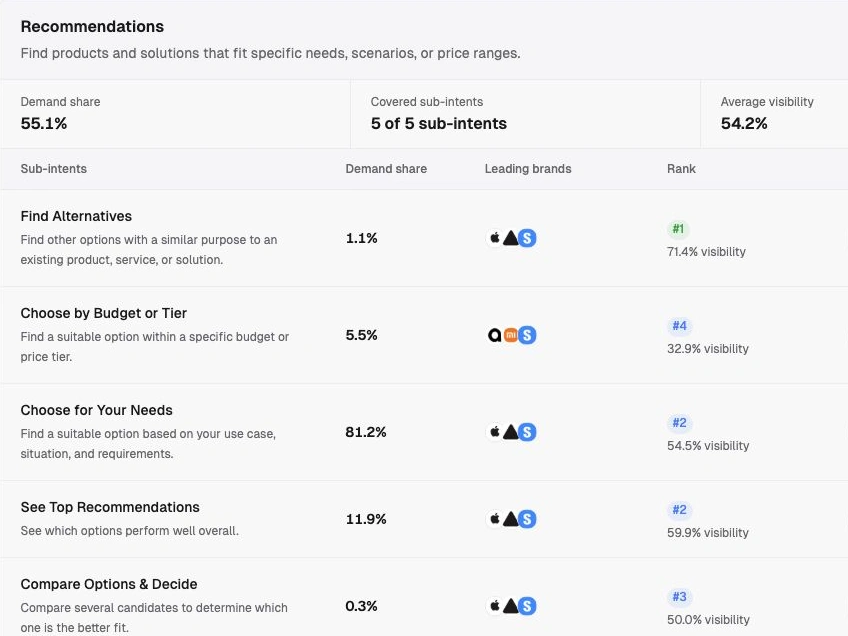
Search Intents — buyer questions organized by task and stage. Sample
What this map can and cannot establish
AI Search Intents and answer patterns describe the selected AI-answer sample. They do not prove search volume, customer demand, purchase intent, buyer behavior, or sales.
Journey-stage assignments are an analytical framework, not a record of an individual's path. Validate them with first-party research and analytics.
Guide card — what this map can and cannot establish. Not product UI
Trace findings to original answers
Dageno organizes a defined set of AI-search questions and answers by user task and journey stage. It shows observed brand coverage, answer context, and cited URLs so teams can trace a content gap to its evidence.
No. The map describes patterns within the selected question and AI-answer sample. It is not verified search volume or revenue, and it does not establish customer demand, purchase intent, or buyer behavior. Teams should validate priorities with first-party research and analytics.
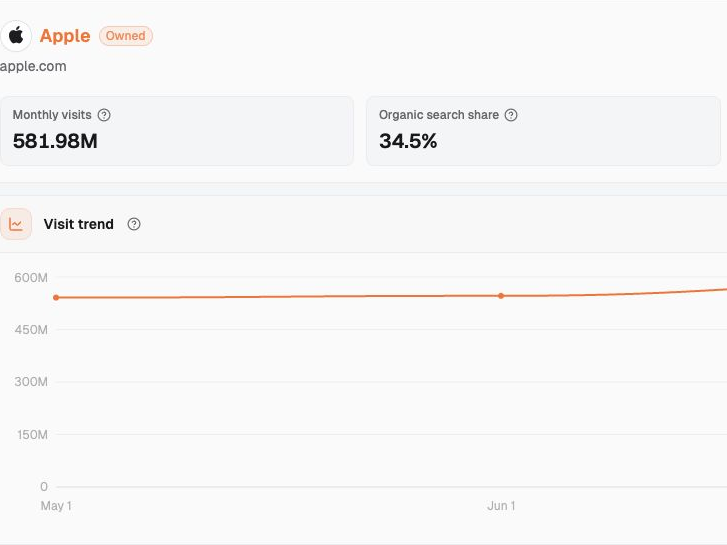
Organic estimates — background web context, kept separate from AI intents. Sample
How to use the evidence
Dageno organizes a defined set of AI-search questions and answers by user task and journey stage. It shows observed brand coverage, answer context, and cited URLs so teams can trace a content gap to its evidence.
No. The map describes patterns within the selected question and AI-answer sample. It is not verified search volume or revenue, and it does not establish customer demand, purchase intent, or buyer behavior. Teams should validate priorities with first-party research and analytics.
Guide card — usage boundaries from product guidance. Not product UI
Common questions
What does buyer journey content mapping show?
Dageno organizes a defined set of AI-search questions and answers by user task and journey stage. It shows observed brand coverage, answer context, and cited URLs so teams can trace a content gap to its evidence.
Does the map represent real customer demand or search volume?
No. The map describes patterns within the selected question and AI-answer sample. It is not verified search volume or revenue, and it does not establish customer demand, purchase intent, or buyer behavior. Teams should validate priorities with first-party research and analytics.
How does a team turn the map into a content priority?
Start with a journey question where the brand is absent, weakly supported, or tied to incomplete evidence in the selected sample. Open the original answers and cited pages, identify the verifiable facts missing from that context, then choose which page or proof asset to strengthen. Repeat the same scoped review in a later window and compare the results.
See how Dageno works for your market.
Tell us your brand and market. We’ll reply from support@dageno.ai — or start with a free report on your own.
Find out what AI tellsyour buyers about you.
Enter your brand and domain to start — from $67/mo.